Venus Williams is an icon a living legend, if you will.
These glands are responsible for producing moisture from sweat and saliva to tears, perCleveland Clinic.
Doing so meant facing her illness head-on and changing the way she looked at and treated her body.

“It was a head trip.
“Was I working too hard?
What was I doing wrong?
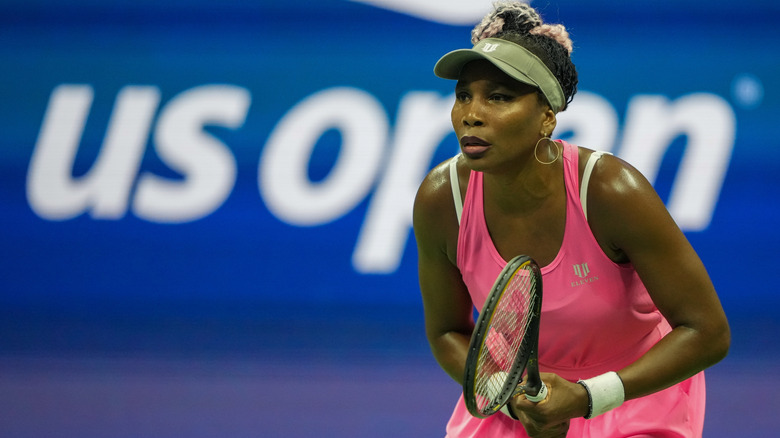
Speaking toEssence, the tennis star recalled how she first started experiencing symptoms in 2004.
She couldn’t get fit, no matter how hard she trained.
“As an athlete, you don’t make excuses.

The syndrome can also affect the digestive system.
Additionally, patients can experience brain fog and rashes and might find talking and swallowing challenging.
Some also experience tooth decay, heartburn, indigestion, neuropathy, and sensitivity to light.

For Williams, the constant fatigue and pain are what got the better of her.
It was really frustrating,” she toldPrevention.
“My symptoms got progressively worse, to the point where I couldn’t play professional tennis anymore.”

“I felt out of control,” she admitted.
Eventually, she got so sick that she could barely function normally.
The persistent fatigue and pain started to affect her quality of life.
“Just being alive was very uncomfortable,” she recalled.
“There is no substitute for being well.
I had to change my pace.”
In 2011, it seemed like the tennis star’s disease was set to end her career for good.
She had to forfeit the U.S. Open because she was too tired to compete.
“One of the medications I had took six months to set in.
There was another that took one to three months.
Taking a step back from her career and confronting her illness head-on required a lot of bravery.
Now that’s all out of the window.
So I had to learn to overcome fear,” Williams toldGood Morning America.
She admitted that she had to take each day as it came and focus on getting through it.
She also tried to steer clear of processed foods.
Williams made sure to fuel her body properly despite being on a strict diet.
She’d adjust her diet accordingly depending on her training and competition schedule.
Something else Williams likes to nibble on every now and then, despite her vegan diet, is cheese.
She also has some sugar every now and then.
“I have some fun with sweets, too.
I’m only human!”
But it wasn’t easy.
She told Harper’s Bazaar that, while her diagnosis was a relief, it was also devastating.
“It was hard to accept.
I’m used to doing whatever I want, working hard and staying fit.
You just have to be smarter,” she said.
Williams had to completely change her usual all-or-nothing mindset to accommodate her body and its needs.
Celebrating the small wins like a five-minute run became her go-to method for not giving up.
This is something tennis taught her, and a lesson she will always carry with her.
