This was a 30-year period of sectarian religious violence between Protestants and Catholics.
From here, his film career soon took off.
Unfortunately, he wasn’t unfamiliar with the pain of tragedy.

When he asked his parents, they simply told him, “You don’t need to know.”
Neeson also spoke to George of the march and its significance for both Catholics and protestants.
“I never stop thinking about it,” Neeson said (viaIrishCentral).

“I’ve known guys and girls who have been perpetrators of violence and victims.
It’s part of my DNA.”
While in the hospital, Neeson said he found himself craving morphine.
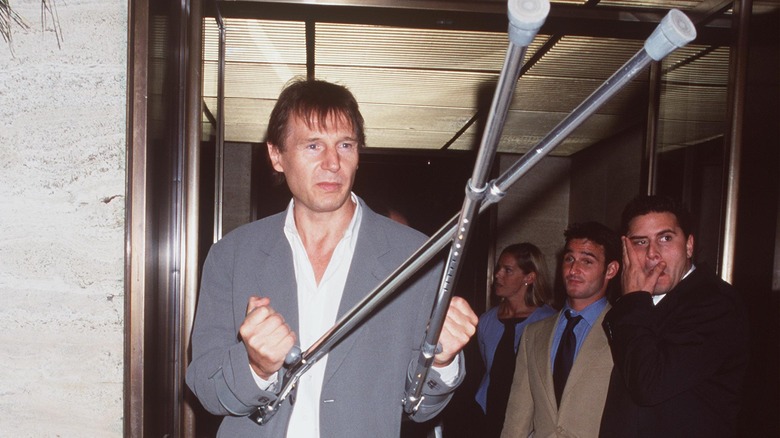
“I’m like Herman Munster,” he told the outlet (viaNDTV.com).
“I’ve got bolts and pins in my pelvis and my knees.
I’m lucky if I get two-and-a-half, three hours a night.

The impact remains to this day.
Neeson opened up about his loss during a 2014 interview with Anderson Cooper for"60 Minutes.
““Grief’s like it hits you,” the actor said.
“It’s like a wave.
You just get this profound feeling of instability.
You feel like a three-legged table.
Just suddenly … the Earth isn’t stable anymore.
And then it passes and becomes more infrequent, but I still get it sometimes.”
However, Neeson has found a way to feel connected to his late wife.
“I go down there quite often, so I do speak to her as if she’s here.
Not that she answers me.”
“It was like, ‘Wait a minute …
This isn’t a good example for my boys, so I’m just going to quietly stop.
Not going to announce it.
Just quietly stop.’
And I did.”
“That was kind of strange it was kind of surreal.”
If you or anyone you know needs help with addiction issues, help is available.
Visit theSubstance Abuse and Mental Health Services Administration websiteor contact SAMHSA’s National Helpline at 1-800-662-HELP (4357).
