That’s because Colin was aceleb that had kids the public knew nothing about.
The condition is rare, only affecting around 1 in 12,000 to 20,000 people worldwide, according toCleveland Clinic.
“[James] works his arse off.

“He’s happy and healthy and hasn’t had a seizure in over two years.”
Naturally, James' childhood has been vastly different from his half-brother, Henry Farrell’s.
Colin first told the world about his son’s diagnosis in 2007.
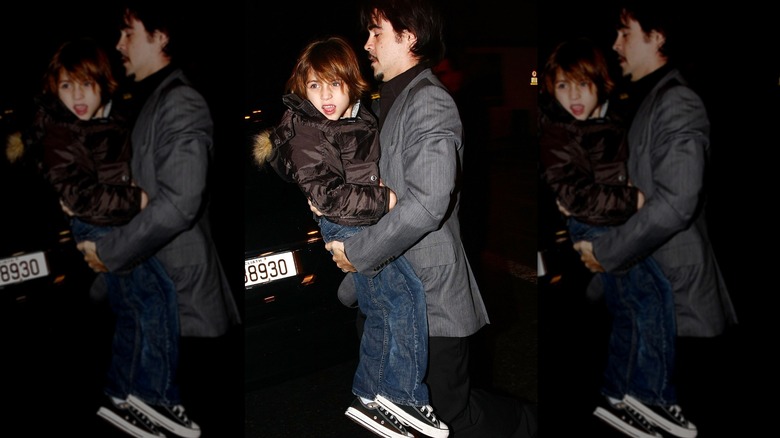
“[James shows] amazing courage,” Colin said.
James, for instance, didn’t start walking at the expected age.
According to Cleveland Clinic, James probably displayed numerous facial symptoms as well.

James likely also had difficulty concentrating since Angelman syndrome can cause a short attention span along with hyperactivity.
Sleep is also difficult for children with this disorder, but this improves as they get older.
He also shared a big milestone James managed to reach that year.

“He took his first steps about six weeks ago, and it was four years in the making.
It was incredibly emotional.
There wasn’t a dry eye in the house,” Colin said.

Often, these unexplained cases present in children who already have conditions related to genetics and chromosomes.
Most commonly, however, Angelman Syndrome is resulting from an inactive UBE3A gene.
It’s not clear what caused James Farrell’s Angelman syndrome.

A year later, a pediatric neurologist reassessed James' diagnosis and found that he actually had Angelman syndrome.
When doctors know what to look for, Angelman syndrome can be easier to identify.
Doctors usually start with a blood test, which is then assessed for any signs of genetic anomalies.

These tests usually include a DNA methylation test and chromosomal microarray (CMA).
“All these things are huge, huge achievements,” the actor said.
But he gets it in, he feeds himself beautifully,” Colin toldPeople.

“James is somewhere kind of in the middle of that field,” Colin said.
This allows his son to have a sense of independence.
He has a good life," Colin said.

He explained that many people with Angelman syndrome are left to fend for themselves when they become adults.
People with Angelman syndrome need ongoing care, no matter their age.
She was wrong," Poletto wrote.
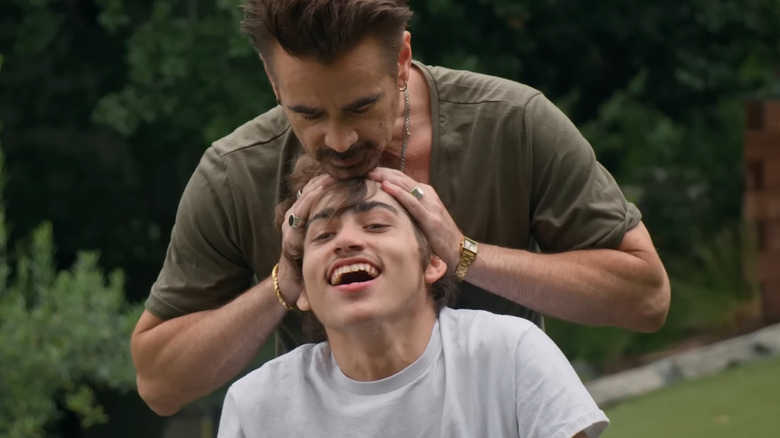
This is exactly what Colin hopes James' story will do for others.
It’s one of the main reasons he founded the Colin Farrell Foundation.
With the foundation, Colin hopes to provide continued support to adults with Angelman syndrome.
It’s all in James' honor."
That’ll be the dream," Colin said.
Dr. Segal was likely referring to a gene therapy study that was published inNaturein 2020.
The same results were observed when Zylka and his team tested it in culture on human neurons.
“He would say, ‘Dad, what are you talking about?
Why are you even asking me?
It’s a no-brainer.’
So that’s why we’re doing it” he said.
“I want the world to be kind to James,” Colin said.
“I want the world to treat him with kindness and respect.”
